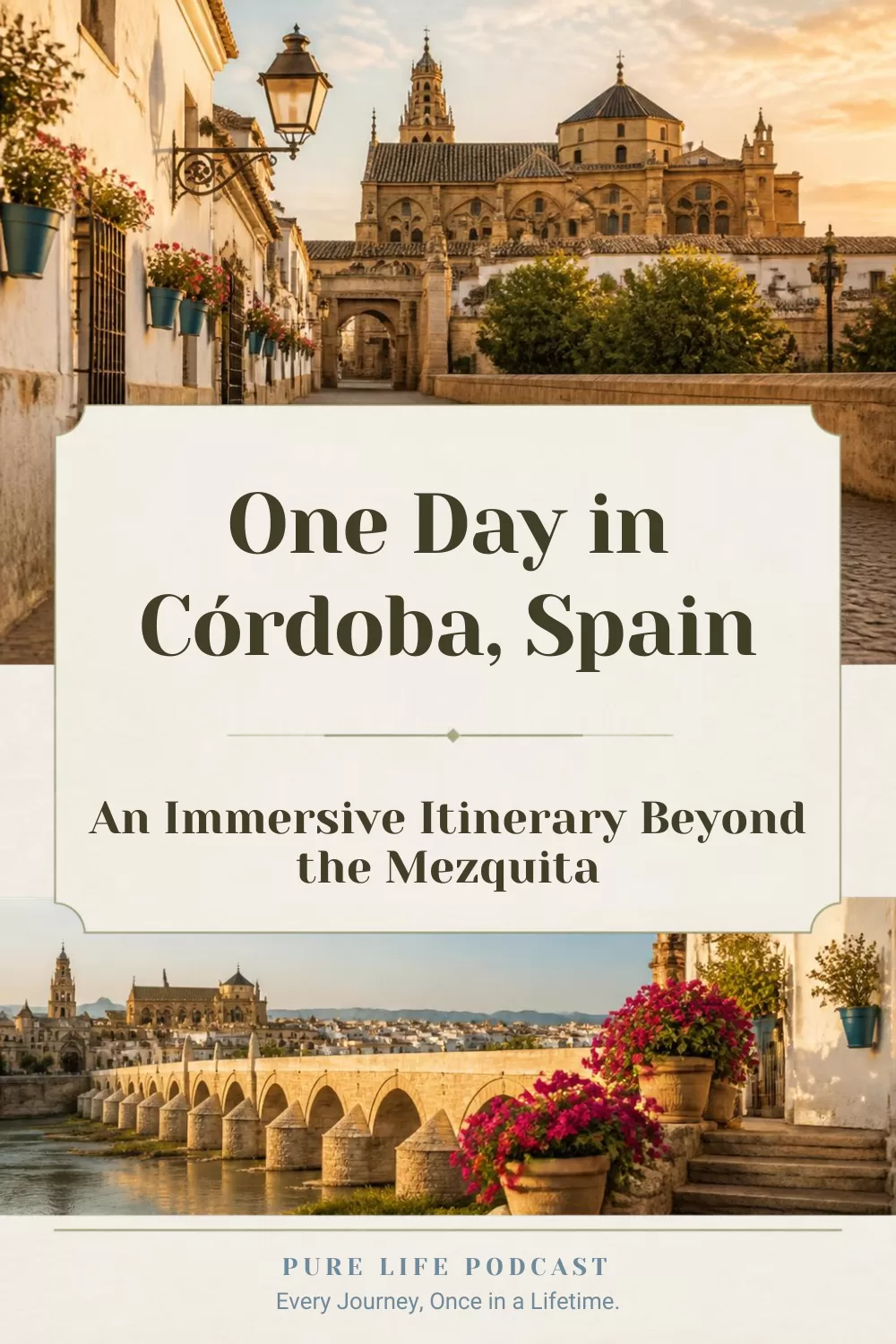
Córdoba is the kind of city that makes you wish you had more time.
Roman ruins appear between modern buildings. Whitewashed lanes twist through the old Jewish Quarter. Flower-filled balconies add splashes of color to narrow streets, while one of the most extraordinary buildings in Spain rises at the heart of it all: the Mosque-Cathedral of Córdoba.
If you only have one day in Córdoba, Spain, however, don’t worry. Córdoba’s historic center is compact enough to experience many of its highlights in a single day without turning your visit into a race.
We visited Córdoba as part of our travels through Spain, and what stayed with us wasn’t simply one monument. It was the layers of the city — Roman, Islamic, Jewish and Christian history existing remarkably close together.
For travelers who enjoy experiencing a destination rather than simply checking attractions off a list, Córdoba makes an excellent addition to an Andalucía itinerary.
Here’s how we’d spend one day in Córdoba, Spain, including the places we’d consider essential, where we’d leave room to wander, and one important lesson we learned about driving through the historic center.
Table of Contents
Short Answer: Is One Day in Córdoba Enough?
Yes. One day is enough to experience Córdoba’s historic center and several of its most important sights, particularly if you start early and explore primarily on foot.
For a first visit, prioritize:
- Mosque-Cathedral Monumental Site of Córdoba
- Calleja de las Flores
- The Judería, or Jewish Quarter
- Alcázar de los Reyes Cristianos
- Roman Bridge of Córdoba
- Templo Romano
- Plaza de la Corredera
- Córdoba’s streets, patios and local food
You won’t experience everything Córdoba has to offer in a day, but you can experience enough to understand why this city deserves more than being treated as a quick stop between larger Spanish destinations.
Why Visit Córdoba?
Córdoba is one of those cities where history isn’t confined to museums. You walk through it.
At various points in its history, Córdoba was shaped by Romans, Visigoths, Muslims, Jews and Christians, leaving an architectural and cultural legacy that feels unusually concentrated within its historic center.
The result is a city where you can stand among Roman columns, walk through the former Jewish Quarter, step inside one of the world’s most remarkable examples of Islamic architecture and then cross a bridge whose origins stretch back to Roman Córdoba — all within the same day.
That makes Córdoba particularly appealing to travelers who want more than another beautiful European city.
It gives you a sense of the civilizations that shaped Andalucía.
One Day in Córdoba Spain: Suggested Itinerary at a Glance
8:30 AM — Explore the Judería
9:00 AM — Calleja de las Flores
10:00 AM — Mosque-Cathedral of Córdoba
11:30 AM — Wander the historic center
12:15 PM — Alcázar de los Reyes Cristianos
1:30 PM — Traditional Córdoban lunch
3:00 PM — Plaza de la Corredera
3:30 PM — Templo Romano
4:00 PM — Explore Centro
5:00 PM — Roman Bridge and Guadalquivir
Sunset — Look back toward the Mosque-Cathedral from across the river
The times aren’t meant to be rigid. Use them as a framework and adjust according to what captures your interest.
One Day in Córdoba Spain: Recommended Itinerary
8:30–9:30 AM: Begin in the Judería
Start your one day in Córdoba Spain itinerary early. Before heading directly into the Mosque-Cathedral, spend a little time walking through the Judería, Córdoba’s historic Jewish Quarter.
This is one of those places where having an exact route almost defeats the purpose. Allow yourself to wander.
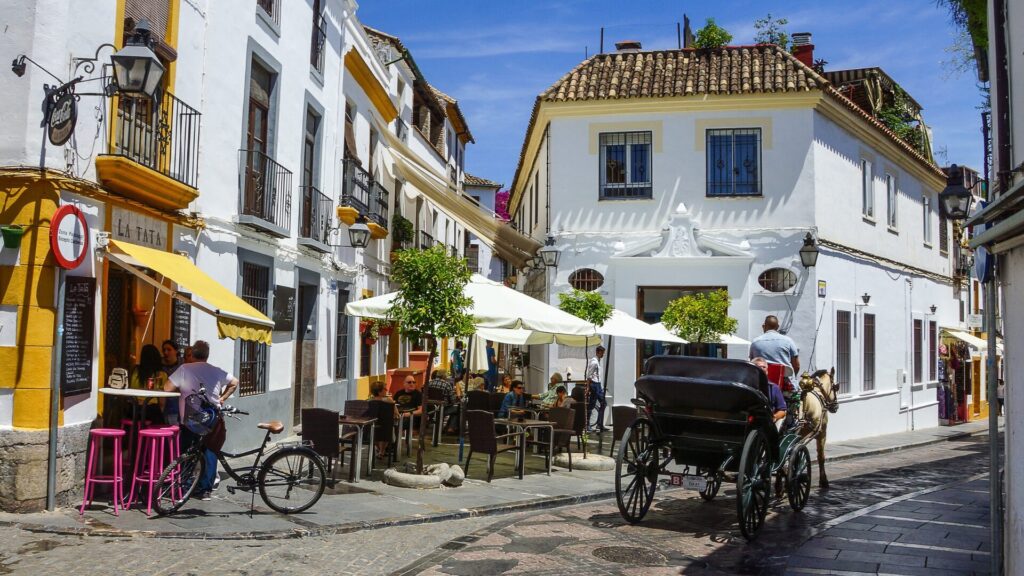
The streets narrow and turn unexpectedly, opening occasionally into tiny squares and courtyards. Whitewashed buildings, wrought-iron balconies, colorful flowers and small restaurants create the atmosphere people often imagine when they picture Andalucía.
Starting early also gives you a chance to appreciate these streets before the busiest part of the sightseeing day begins.
Don’t Miss Calleja de las Flores
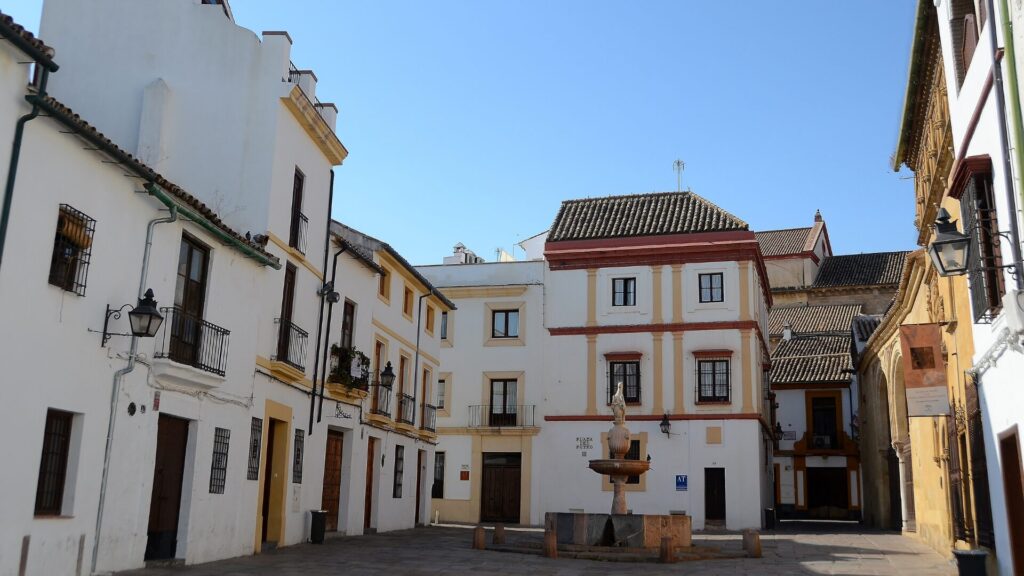
One particularly beautiful stop is Calleja de las Flores, just a short distance from the Mosque-Cathedral. The narrow lane leads toward a small plaza framed by traditional buildings and flower-filled balconies. Look back from the plaza and you’ll get one of Córdoba’s classic views, with the bell tower of the Mosque-Cathedral appearing between the buildings.
Córdoba’s tourism office identifies Calleja de las Flores as one of the city’s traditional streets and highlights this view toward the Mosque-Cathedral tower.
It’s a small place and doesn’t require much time. That’s part of its charm.
PLP Tip
Visit Calleja de las Flores early if possible. It’s a tiny street, and the experience is considerably different when you have enough space to actually stop and appreciate the surroundings rather than simply moving with a crowd.
10:00 AM: Mosque-Cathedral Monumental Site of Córdoba
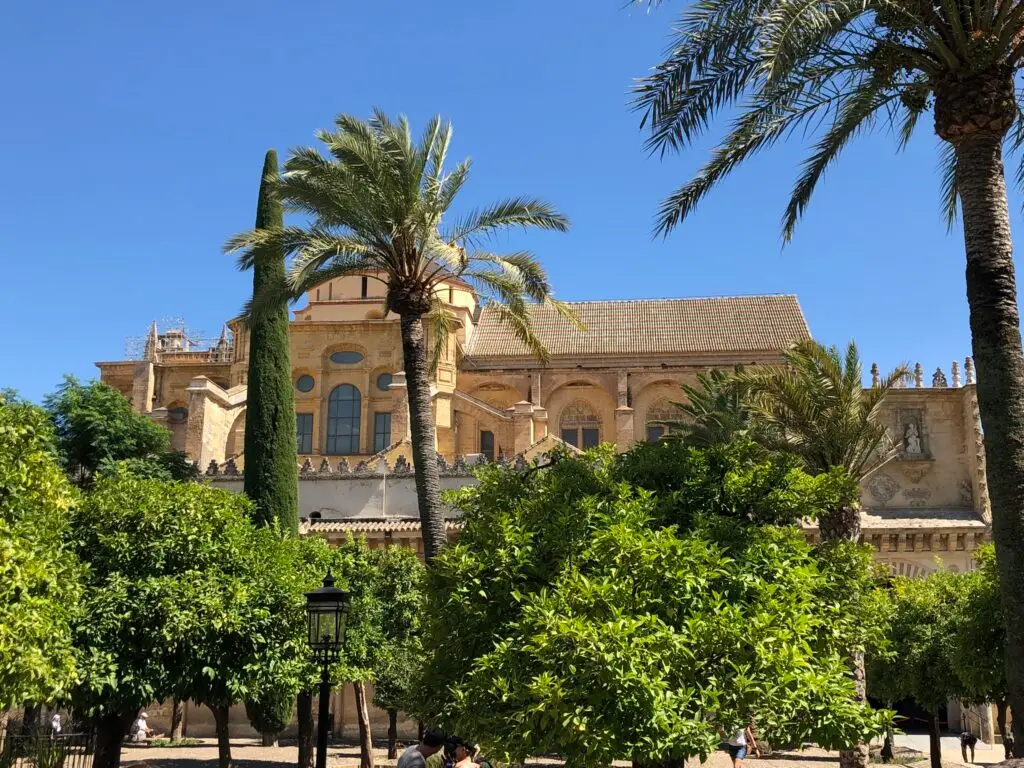
If there is one place you absolutely should not miss during one day in Córdoba, this is it. The Mosque-Cathedral of Córdoba, or Mezquita-Catedral, is not simply Córdoba’s most famous attraction. It’s one of those rare places where architecture allows you to physically see centuries of cultural change within a single building.
The site evolved across different periods, incorporating Visigothic, Islamic and Christian history. Today, the enormous interior is instantly recognizable for its forest of columns and distinctive red-and-white arches.
But photographs don’t quite prepare you for the scale. Walk slowly. Look down the seemingly endless rows of arches, but also pay attention to how dramatically the architecture changes as you move through the building.
The contrast between the Islamic prayer hall and the later Christian cathedral elements is extraordinary.
Rather than feeling like two completely separate monuments, the layers exist together — sometimes harmoniously and sometimes dramatically — making the building a fascinating reflection of Córdoba’s complicated history.
Allow plenty of time here, as there is so much to see, experience and enjoy.
The official Mosque-Cathedral currently lists general admission at €15, with schedules varying by date. It also offers a limited free individual visit Monday through Saturday from 8:30–9:30 a.m., except on certain extraordinary celebration days. Always check the official schedule before planning your day because religious services and special events can affect tourist access.
PLP Tip
Don’t schedule the Mosque-Cathedral too tightly. This is one place where slowing down is worth far more than squeezing another attraction into your itinerary.
11:30 AM: Explore More of Córdoba’s Historic Streets
Once you leave the Mosque-Cathedral, resist the temptation to immediately move to the next attraction.
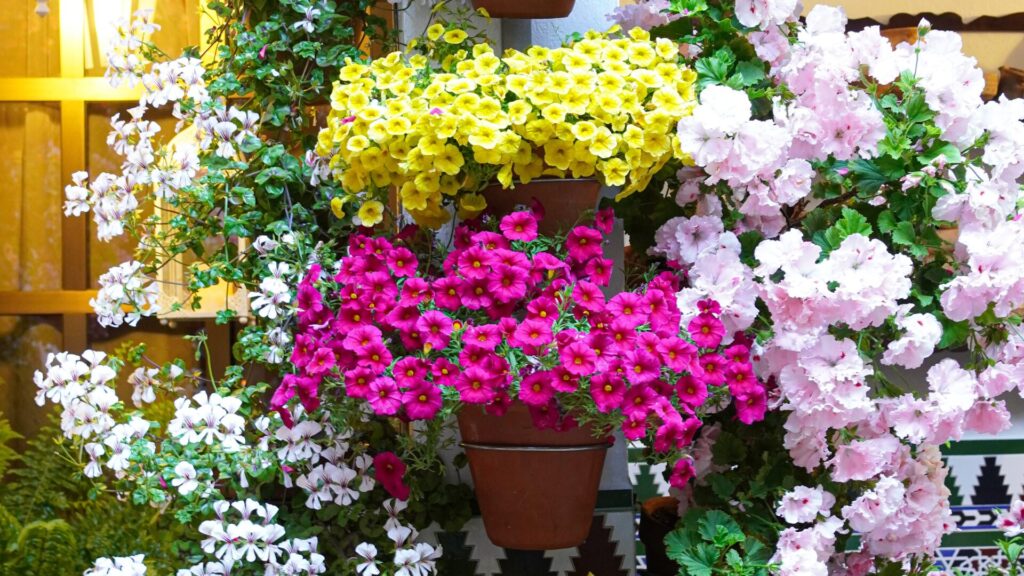
Walk. One of the pleasures of Córdoba is the historic center itself. Explore the lanes around the Judería and notice the patios hidden behind gates and doorways. Córdoba’s famous courtyard tradition transforms relatively simple building exteriors into spaces filled with flowers, ceramic pots, fountains and greenery.
For a one-day itinerary, we’d choose depth over quantity. If a small street, courtyard or café catches your attention, stop. Those unplanned moments are often the ones you remember.
12:15 PM: Alcázar de los Reyes Cristianos
A short walk from the Mosque-Cathedral brings you to the Alcázar de los Reyes Cristianos.
The fortress-palace reflects yet another layer of Córdoba’s history. Roman and Visigothic remains coexist with elements connected to the city’s Islamic and later Christian periods.
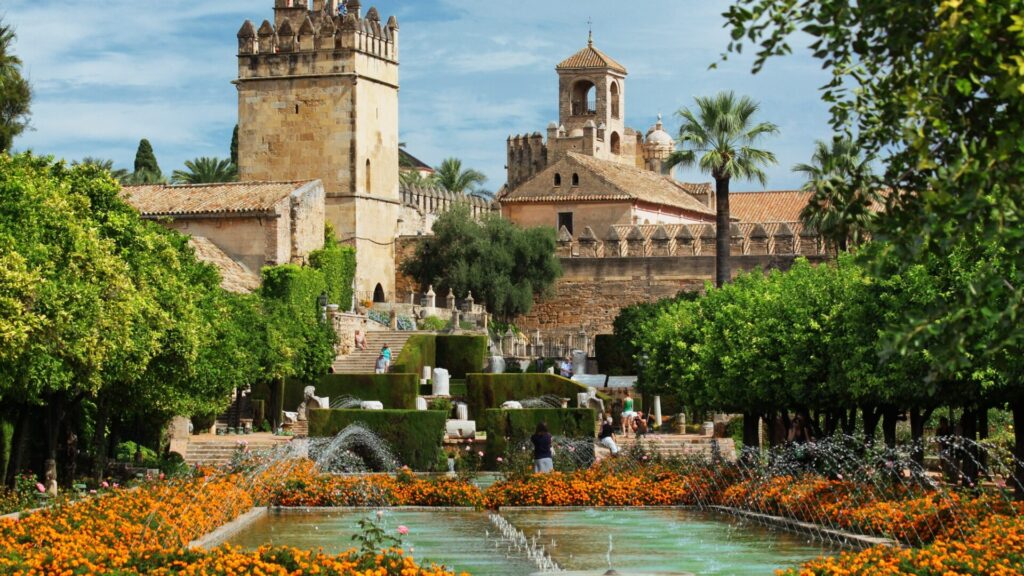
Inside, you’ll find courtyards and historic rooms, but the gardens are one of the highlights. Pools, fountains, orange trees, flowers and carefully arranged greenery create a striking contrast with the heavy stone walls surrounding the complex.
The Alcázar also served as a residence of the Catholic Monarchs, Ferdinand and Isabella. Give yourself around 60–75 minutes if you want to explore both the building and gardens.
Important: Opening hours change seasonally and the complex has undergone restoration work, so check current access before your visit rather than building your entire itinerary around assumed hours.
1:30 PM: Slow Down for a Córdoban Lunch
This is where we would intentionally stop sightseeing. One of the easiest mistakes on a European day trip is trying to see so much that lunch becomes something grabbed while walking between monuments. Córdoba deserves better.
Food is one of the easiest ways to experience Andalucía beyond its architecture. Look for traditional Córdoban dishes such as salmorejo, the thick chilled tomato soup associated with Córdoba, or flamenquín, typically made with pork loin wrapped around ham, breaded and fried.
Other menus may feature oxtail, Iberian ham (a favorite of ours), local cheeses and classic Andalusian tapas. Rather than choosing a restaurant solely because it’s immediately outside the Mosque-Cathedral, walk a few streets farther and find somewhere the local residents gather that makes you want to sit for a while. This is an itinerary, not a race.
3:00 PM: Plaza de la Corredera
After lunch, work your way toward Plaza de la Corredera. The large rectangular square feels quite different from the twisting streets around the Judería. Arcaded buildings surround an expansive central space filled with cafés and everyday activity.
It’s another reminder that Córdoba isn’t simply a collection of historic monuments. People live here. Grab a coffee, sit for a few minutes or simply walk through the plaza on your way toward Córdoba’s Roman heritage.
3:30 PM: Templo Romano
One of the most interesting things about Córdoba is how casually enormous pieces of history seem to appear around the city. The Templo Romano, beside Córdoba’s Town Hall, is a perfect example.
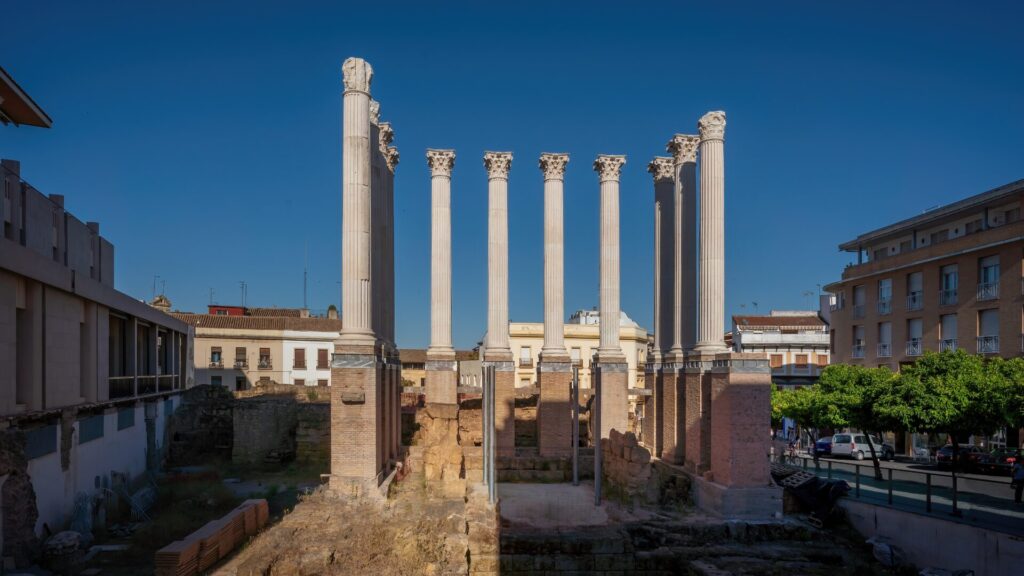
The remains date to the late first century AD and formed part of Córdoba’s Roman provincial forum. The reconstructed Corinthian columns give you a sense of the scale of the original temple and of Córdoba’s importance during the Roman era. You don’t need a huge amount of time here.
Allow around 15–20 minutes, making this an easy addition to a Córdoba one-day itinerary. More importantly, it adds context.
By this point in the day, you’ve moved through Roman Córdoba, Islamic Córdoba, Jewish Córdoba and Christian Córdoba, sometimes without walking more than a few blocks. That’s what makes this city fascinating.
4:00 PM: Wander Back Through Centro
Instead of plotting the shortest possible route back toward the river, leave yourself some time to explore Centro. Browse small shops. Stop for coffee. Look down side streets. Pay attention to balconies and courtyards.
This is also where we learned one of our most memorable practical lessons in Córdoba.
PLP TIP
Be Very Careful Driving in Córdoba’s Historic Center!
If you’re visiting Córdoba by rental car, don’t blindly follow Google Maps once you enter Centro. We learned this the hard way.
Google Maps directed us down streets that became progressively narrower until we found ourselves on a lane that was realistically better suited to a motorcycle or bicycle than our car. Our car nearly became stuck and the locals tried to warn us but we didn’t quite understand their warnings.
We eventually had to carefully back our way out of the street (our two boys had to hop out and literally guide me as I was backing up so as not to scrape the mirrors or the side of the car along the walls).
Córdoba’s historic center contains extremely narrow streets, restricted-access areas and routes that may appear perfectly reasonable on a navigation app but are very different when you’re sitting behind the wheel.
If you’re driving:
- Park outside the tightest part of the historic center whenever possible.
- Walk into Centro rather than trying to drive directly to every attraction.
- Pay close attention to access signs and street width.
- Don’t assume that because Google Maps shows a road, it’s a road you’ll comfortably want to drive down.
This is one situation where the shortest route on your phone may definitely not be the easiest route in real life. Once parked, Córdoba is much better experienced on foot anyway.
5:00 PM: Roman Bridge of Córdoba
Finish your sightseeing day where Córdoba’s history and landscape come together beautifully: the Roman Bridge of Córdoba. The bridge crosses the Guadalquivir just beyond the Mosque-Cathedral.
Its origins date to the Roman period, although the structure has been rebuilt and modified extensively over the centuries. Córdoba’s tourism office notes that the current bridge has sixteen arches and that much of its present structure dates from the medieval period.
Walk across the bridge and once you reach the opposite bank, turn around. From here, you get one of the most memorable views of Córdoba: the Roman Bridge leading across the Guadalquivir toward the Mosque-Cathedral and the old city beyond.
If your schedule allows, this is an especially beautiful place around golden hour or sunset. It’s also a fitting way to end your one day in Córdoba Spain itinerary.
You started the day walking through Córdoba’s intimate historic streets. You end it looking back at the city as a whole.
Have a Little More Time?
If you’re moving faster than expected, or staying overnight, there are several additional places worth considering.
Torre de la Calahorra
At the far end of the Roman Bridge stands the Torre de la Calahorra, a medieval defensive tower that now houses the Museo Vivo de Al-Andalus.
Córdoba Synagogue
Located within the Judería, the small 14th-century synagogue provides another important window into Córdoba’s Jewish history.
Palacio de Viana
If Córdoba’s famous patios particularly interest you, consider the Palacio de Viana, known for its collection of courtyards and gardens.
Medina Azahara
If you have another half-day or a second day, Medina Azahara deserves consideration.
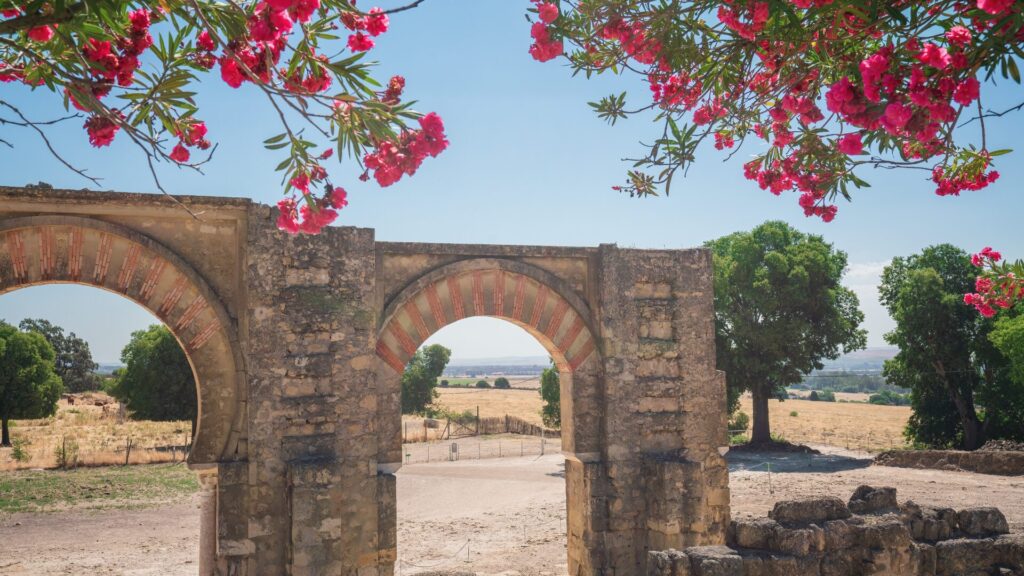
The archaeological site sits outside central Córdoba and preserves the remains of the 10th-century palace-city built during the height of the Caliphate of Córdoba.
We would not try to squeeze Medina Azahara into the itinerary above. It deserves time of its own.
Getting to Córdoba
Córdoba works particularly well as part of a broader Andalucía trip. High-speed rail connections make it relatively easy to reach from cities including Seville and Madrid, and Córdoba’s train station is within walking distance or a short taxi ride of the historic center.
If you’re road-tripping through Spain, driving gives you additional flexibility, but once you reach Córdoba, our recommendation is simple: Park the car and explore on foot.
Most of the places included in this itinerary are concentrated within or around the historic center. And after our experience navigating those tiny streets, that’s advice we’re very comfortable giving.
When Is the Best Time to Visit Córdoba?
Spring and fall are particularly appealing times to explore Córdoba because you’ll spend much of the day walking outdoors. Spring has another advantage: Córdoba is famous for its patios and flowers, culminating in the city’s annual courtyard celebrations.
Summer can be extremely hot, so if you’re visiting during the warmer months, start early, build a long lunch or afternoon break into the day and save outdoor wandering for later. Regardless of season, comfortable walking shoes are essential.
What to Eat in Córdoba
Even with only one day, make food part of your Córdoba experience. Look for:
- Salmorejo Cordobés — Córdoba’s signature chilled tomato dish, thicker and creamier than gazpacho and traditionally topped with egg and ham.
- Flamenquín — pork wrapped around ham, breaded and fried.
- Rabo de toro — slow-cooked oxtail, another traditional local dish.
- Jamón Ibérico — worth enjoying slowly rather than simply ordering as an appetizer because you feel you should.
And don’t underestimate the simple pleasure of stopping for coffee, wine or tapas somewhere away from the busiest sightseeing streets. For us, food isn’t something separate from experiencing a destination. It’s part of understanding it.
FAQ: Visiting Córdoba in One Day
Q: Is one day in Córdoba enough?
Yes. Córdoba’s compact historic center makes it possible to visit the Mosque-Cathedral, Judería, Alcázar, Roman Bridge and several additional sights during a well-planned day. Staying overnight gives you more time to experience Córdoba after the day-trip crowds leave, but one full day still provides a rewarding introduction.
Q: What should I absolutely see in Córdoba?
If you only have a few hours, prioritize the Mosque-Cathedral, Judería and Roman Bridge. With a full day, add the Alcázar de los Reyes Cristianos, Calleja de las Flores, Templo Romano and time for a traditional meal.
Q: Is Córdoba walkable?
Very much so. The main attractions within Córdoba’s historic center are relatively close together, which is one reason the city works so well for a one-day itinerary.
Q: Do I need a car in Córdoba?
Not for the itinerary in this guide. In fact, once you reach Córdoba, we’d recommend parking and exploring the historic center on foot.
Q: Can Córdoba be a day trip from Seville?
Yes. Córdoba and Seville are connected by high-speed rail, making Córdoba a popular day trip or stop within a longer Andalucía itinerary.
Q: Should I book the Mosque-Cathedral in advance?
We recommend checking the official Mosque-Cathedral website before your visit for current opening hours, ticket availability and any changes related to religious services or special events.
Final Thoughts: Córdoba Deserves More Than a Checklist
If you have one day in Córdoba, Spain, it’s tempting to think the goal should be seeing as many monuments as possible. We’d approach it differently.
See the Mosque-Cathedral. Walk across the Roman Bridge. Visit the Alcázar and stand beneath the columns of the Templo Romano. But also wander. Look down the narrow lanes of the Judería. Stop beneath the flower-covered balconies. Sit down for salmorejo instead of eating lunch on the run. Watch the light change across the Guadalquivir.
Córdoba’s appeal isn’t simply that it contains extraordinary historic sites. It’s that so many layers of Spanish history exist within such a remarkably intimate city.
And sometimes the best way to experience a place more deeply isn’t to add another stop to the itinerary. It’s to slow down enough to notice where you already are.
Every Journey, Once in a Lifetime.
Explore More From Pure Life Podcast
Continue planning your journey through Spain:
- Epic Road Trip Through Spain (Podcast)
- For those who have more time to spend in Cordoba –The Perfect 3-Day Cordoba Spain Itinerary for First-Timers
Be sure to sign up for our newsletter to get informed about these and other exciting destinations.
Disclaimer: Our blog contains affiliate links, which means we may earn a small commission at no additional cost to you when you make a purchase through these links. Additionally, please be aware that all information on our blog is subject to change. We recommend checking the respective company websites for the most up-to-date information on hours of operation, locations, costs, etc..before planning your visit. Thank you for your support and understanding!