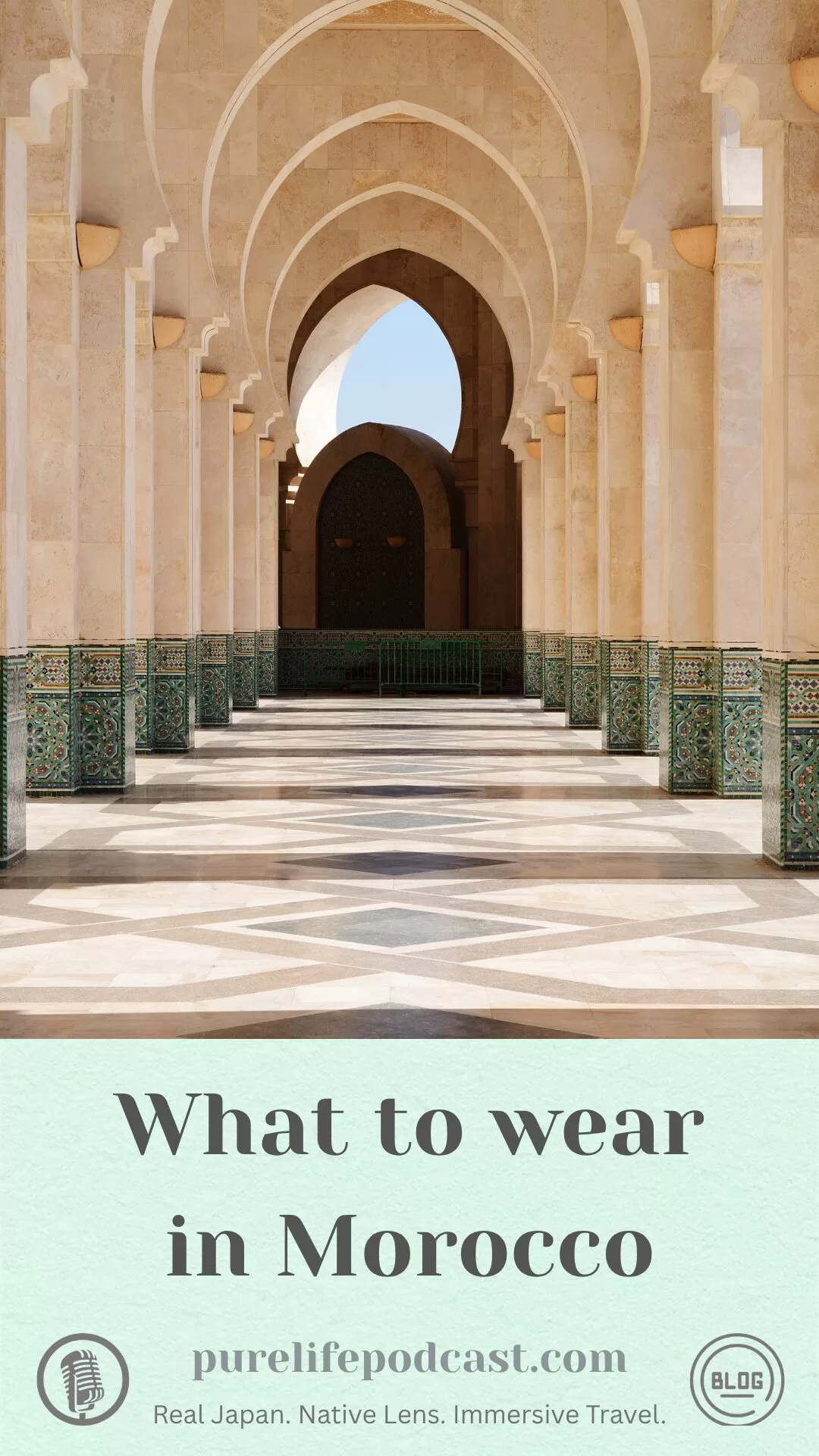
Planning a trip to Morocco – whether you’re heading to Marrakech, the Agafay Desert, or the blue streets of Chefchaouen – one of the first things that comes up is:
What to wear in Morocco?
One thing you notice pretty quickly is how varied everything is. In the Medinas and more touristy areas, you’ll see a mix – traditional dress, loose silhouettes, and also travelers in everything from casual tees to more styled outfits.
What we found, though, was that leaning slightly more modest just felt easier overall – especially in more traditional areas.
Comfort and ease seemed to fit best here.
If you’re mapping out your full trip, we put together a 7-day Morocco itinerary that flows really naturally between Marrakech, the desert, and northern Morocco.
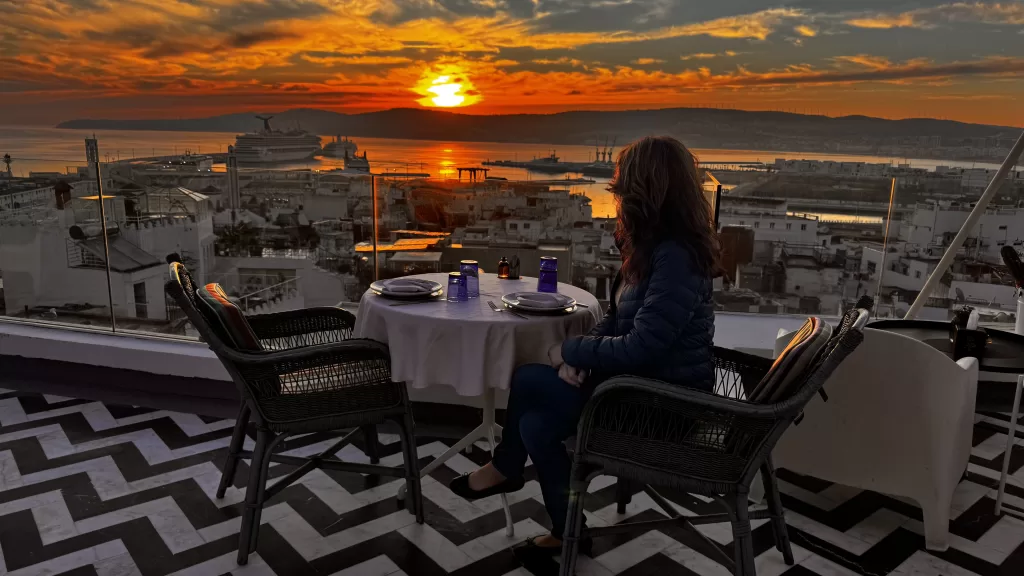
What to Wear in Morocco: The Overall Vibe
If you’re figuring out what to wear in Morocco day to day, the pieces that worked best were:
- Loose, breathable fabrics
- Slightly longer hemlines
- Light layers that could adjust throughout the day
Nothing complicated – just pieces that felt easy to move in and didn’t require much thought once we were out exploring.
What to Wear in Morocco: Items We Actually Wore
These were the pieces we kept reaching for throughout the trip:
- Linen or cotton dresses (midi or maxi)
- Loose pants or capri-style travel pants
- Lightweight tops
- Kaftans (which worked especially well in riads and evenings)
Kaftans, in particular, ended up being one of those pieces that just worked everywhere—comfortable, easy, and fitting naturally into the setting.
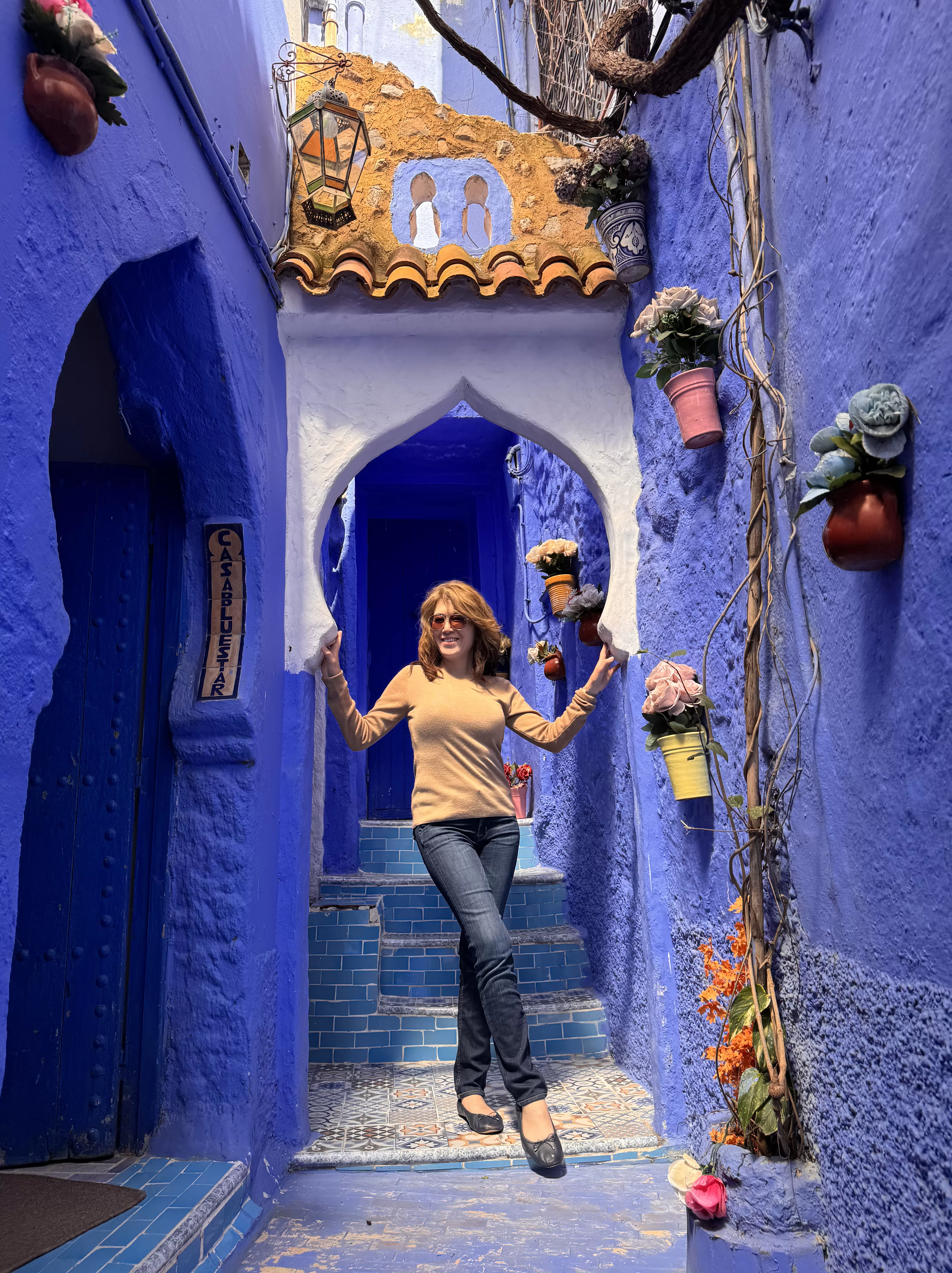
Neutral tones also photographed beautifully, especially in riads and in places like Chefchaouen.
Most days followed a similar rhythm to what we outlined in our 7-day Morocco itinerary – long walks through Medinas, slower mornings in riads, and the occasional day trip – so having easy, repeatable outfits just made everything simpler.



🧣 What to Wear in Morocco: The One Thing We Used Every Day
We found when exploring what to wear in Morocco for the spring a lightweight scarf ended up being one of the most useful things we packed.
It worked for:
- A little extra coverage when needed
- Sun protection
- Wind (especially in the desert and along the coast)
And it just made everything feel a bit more pulled together without trying too hard.
🌿 What to Wear in Morocco: Pieces That Worked Really Well
These are the pieces we kept coming back to throughout the trip:
- PAKA → especially nice for cooler desert mornings and evenings
- Kuhl → a lightweight jacket that worked across flights and evenings
- Free People → easy, relaxed pieces that felt effortless and travel-friendly
- Backcountry → practical, comfortable layers that held up well for longer days
- Banana Republic (Linen line) → simple, breathable pieces that worked in almost every setting
- Title Nine → reliable, didn’t wrinkle, and easy to wear on repeat
When preparing for what to wear in Morocco, keep in mind to pack clothing that’s not too overly styled – just pieces that felt comfortable and easy to wear repeatedly.
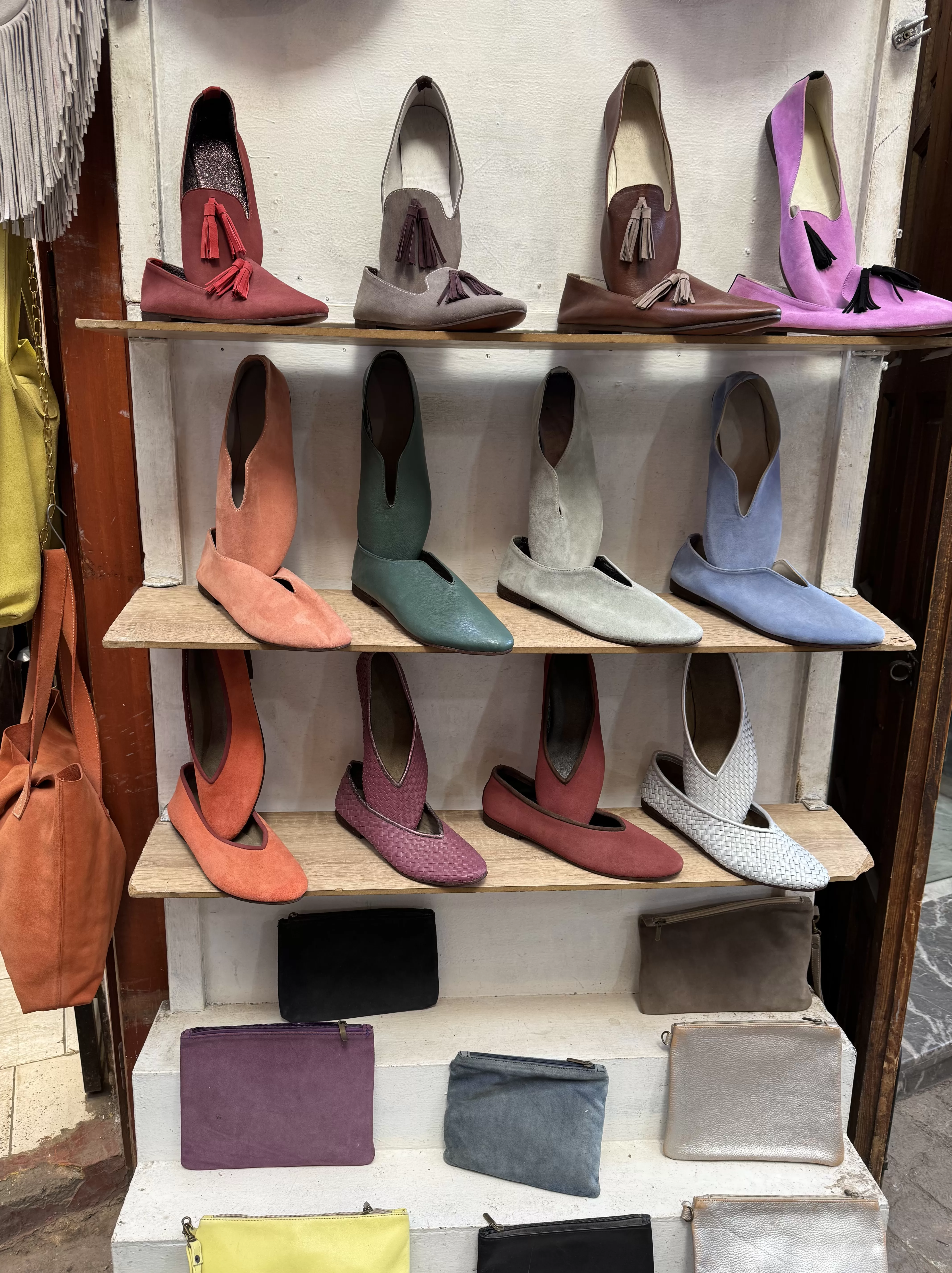
👟 Shoes (This Made the Biggest Difference)
This was probably the biggest factor throughout the trip.
Not in a dramatic way—but just in how much easier each day felt.
🥇 If We Had to Pick One
If we had to bring just one pair, it would probably be HOKA.
We wore them for:
- Agafay desert
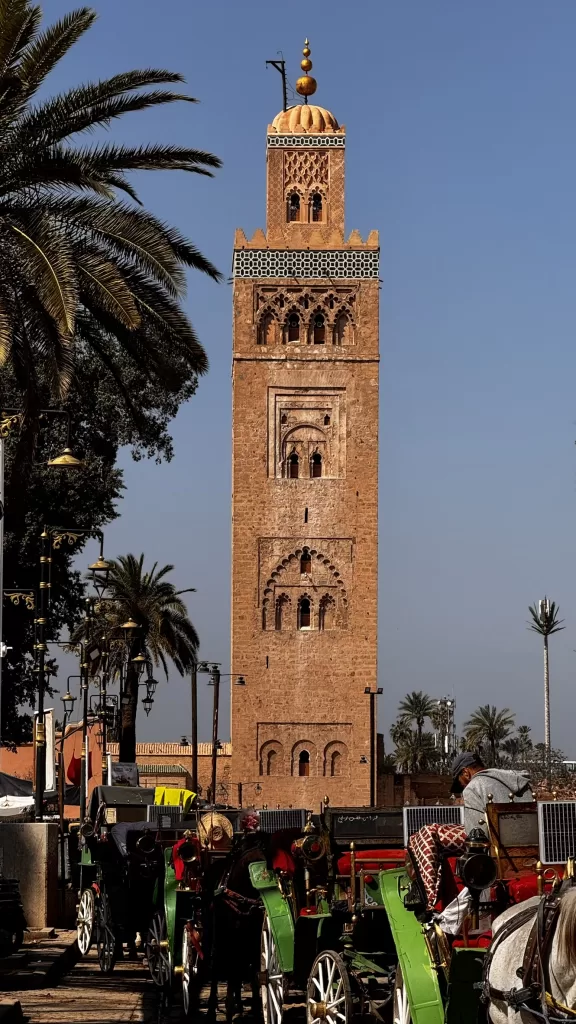
- Walking through Marrakech
- Food tours
- Exploring Tangier
They were just easy – and comfortable across everything.
⚠️ What to Wear in Morocco: The One Thing We Noticed
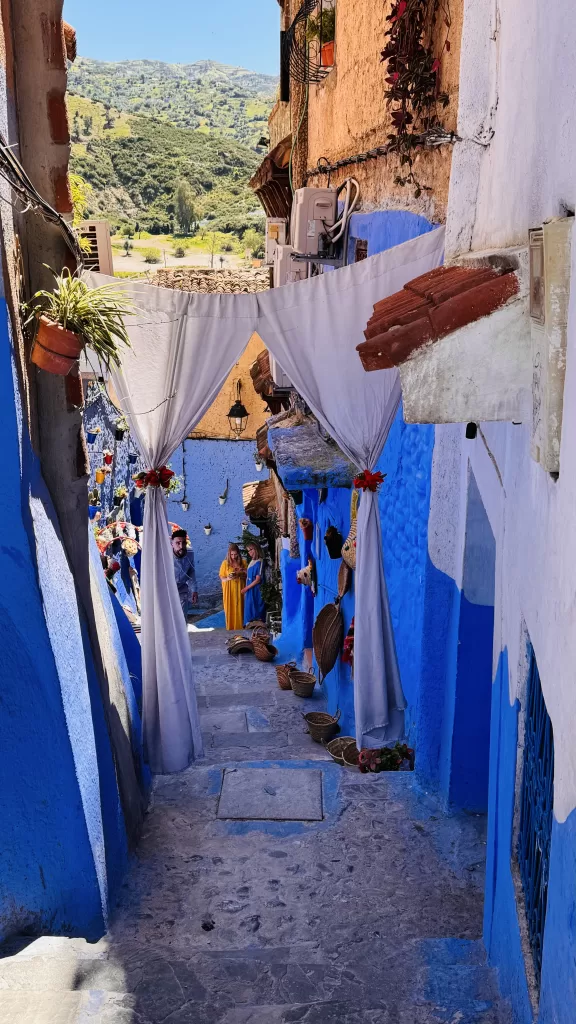
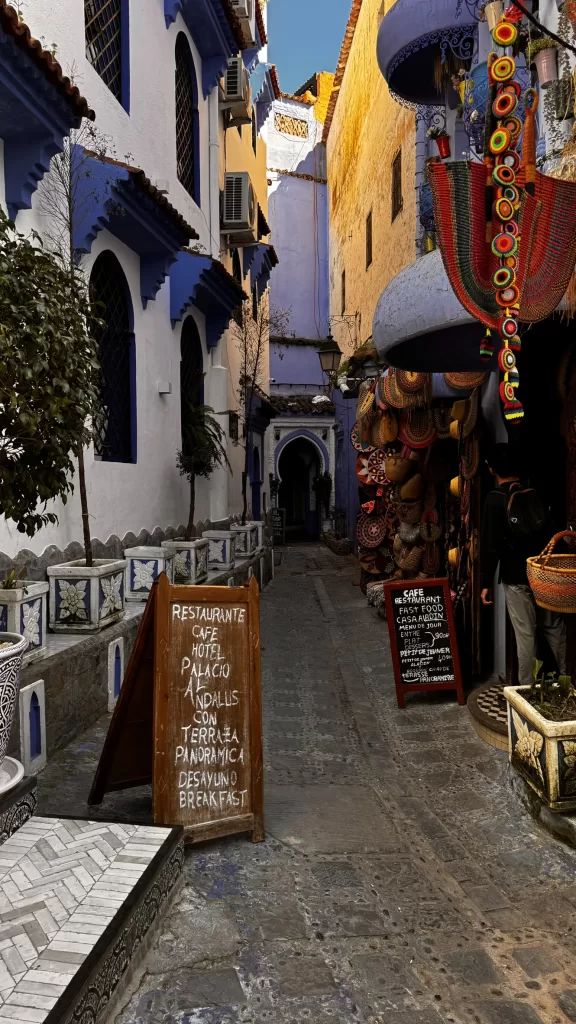
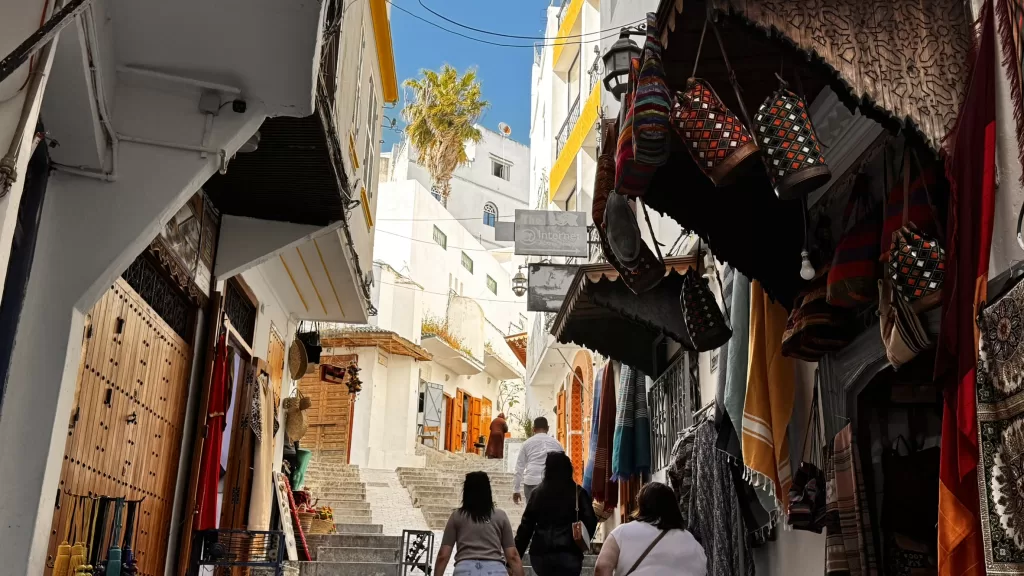
In Chefchaouen, I wore ballet flats – which I normally love – but the streets were steeper and more uneven than expected, and they felt a bit slippery.
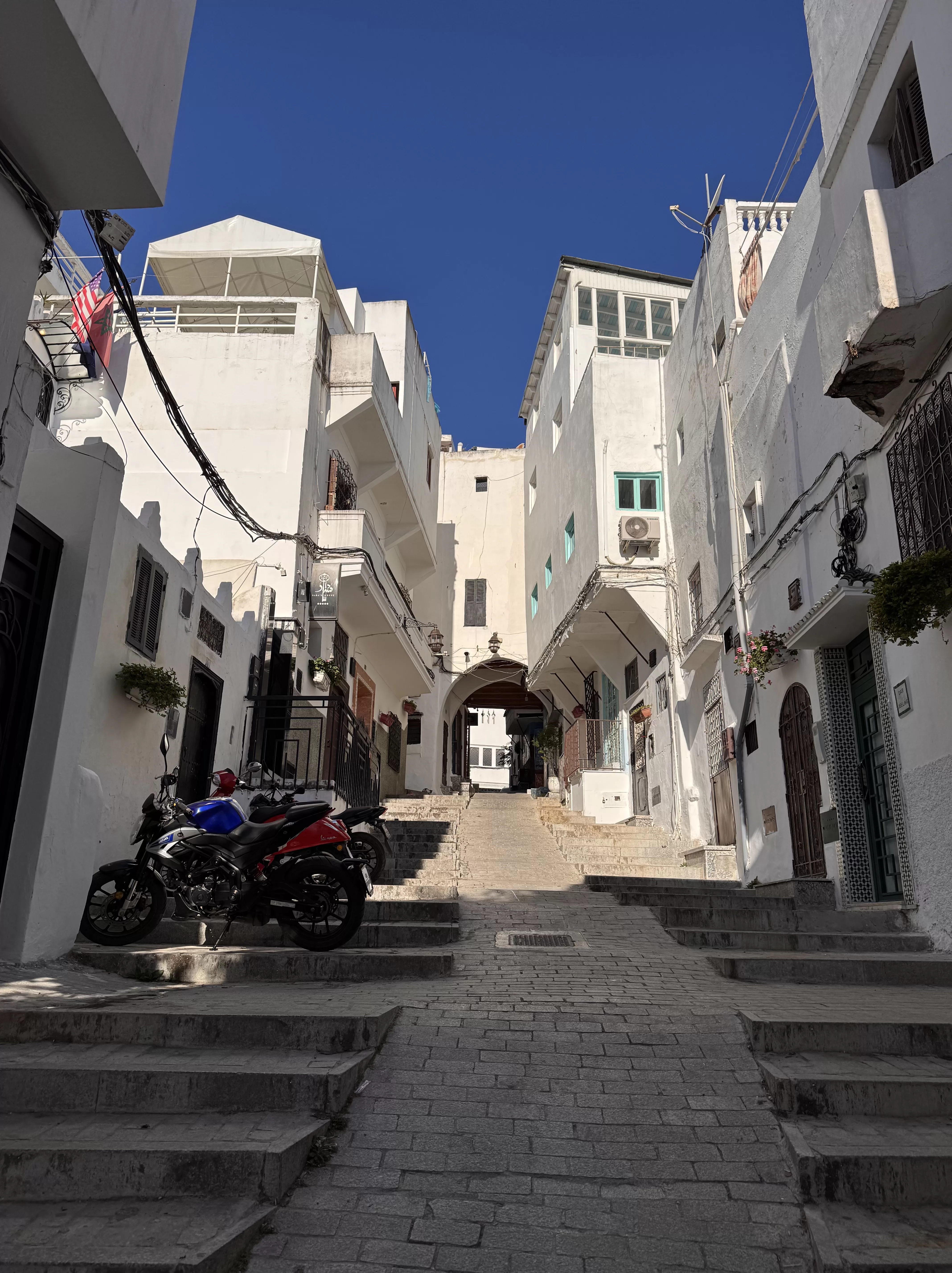
In Tangier, we also found ourselves walking uphill quite a bit to reach our riad.
Having comfortable walking shoes just made everything feel smoother.
We noticed this even more following our 7-day Morocco itinerary – once the walking days add up, comfortable shoes make a bigger difference than anything else.
👟 Other Shoes you may like
- ECCO Soft 7
- Kizik (especially for travel days)
- Veja and Adidas Samba (nice for lighter days and photos)


🥾 For More Active Days
For trips that include more walking or places like Petra, something more supportive can make sense.
But for Morocco, we found that comfortable sneakers were enough most of the time.
🌤️ Weather & Layers
Days were warm, but mornings and evenings cooled down more than expected.
The desert especially had a noticeable shift after sunset.
Having a layer made a difference – something easy to throw on without thinking.


❓ FAQs: What to Wear in Morocco
Q: Do women need to dress modestly in Morocco?
Not strictly – but leaning modest felt more comfortable, especially in traditional areas.
Q: Can you wear shorts in Morocco?
You’ll see it, especially in tourist areas, but longer or looser options just felt easier overall.
Q: What shoes worked best in Morocco?
Comfortable sneakers made the biggest difference – especially for walking and uneven streets.
Q: Do you need a scarf in Morocco?
We ended up using one almost every day – for sun, wind, and flexibility.
Q: What should you wear in the desert?
Light layers during the day, and something warm for evenings.
If you’re still shaping your trip, our 7-day Morocco itinerary breaks down how we structured everything – from Marrakech to the desert to northern Morocco – in a way that felt easy and balanced.
Disclaimer: Our blog contains affiliate links, which means we may earn a small commission at no additional cost to you when you make a purchase through these links. Additionally, please be aware that all information on our blog is subject to change.
We recommend checking the respective company websites for the most up-to-date information on hours of operation, locations, costs, etc..before planning your visit. Thank you for your support and understanding!