Cash Is King (Plan Ahead Early)
 Cash Is King (Plan Ahead Early)
One of the most useful Morocco travel tips is to carry Moroccan dirhams (MAD) for everyday purchases. Cards are accepted at many hotels and some restaurants and shops, but smaller businesses may require cash.
Cash plays a central role in daily life across Morocco especially in the Medina, souks, taxis, and for tipping.
We arrived in Marrakech early in the morning, and the line at the airport currency exchange was already long. ATMs, however, were readily available and proved to be the fastest and most reliable option before leaving the airport.
- ATMs are common in cities and at major airports; plan cash withdrawals before heading to smaller towns
- Keep enough dirhams for your arrival transfer and first small purchases
- ATMs may dispense larger notes; keep smaller denominations when you receive change
 PLP Insight:
Smaller bills quickly become essential. We found ourselves holding onto 20 MAD notes and coins whenever possible especially for taxis, tips, and small purchases where change is often limited.
If carrying USD or another foreign currency as a backup, exchange it at a bank or authorized exchange office rather than relying on it for everyday payments. Keep exchange receipts. The Moroccan National Tourist Office explains exchange facilities and card acceptance.
ATM Use (Choose Location Carefully)
 ATM Use (Choose Location Carefully)
One experience that stood out and easily could have disrupted the trip was using an ATM outside a closed bank.
The machine took our card… and then nothing happened.
No prompt. No error. No assistance button.
For a good seven minutes or so, the card remained inside the machine with no indication of what was happening. It eventually returned the card but not before a moment that could have easily turned into a much larger issue.
PLP Tip:
Our practical lesson: choose an ATM where help is more likely to be available:
- at a bank branch during opening hours
- at staffed airport banking facilities
- or in areas where assistance is available
Avoid standalone machines in quiet or closed areas – especially after hours.
Tipping & Payments
 Tipping & Payments
Small dirham notes and coins make it easier to thank restaurant staff, guides and drivers. Tipping amounts depend on the service and setting; check whether a service charge is already included.
- Ask whether a restaurant can add a tip to a card payment; cash is a useful backup
- For guides, drivers and spa staff, ask your riad for current tipping guidance
- Some restaurants accept only cash; confirm payment options before ordering
Navigating the Medina
 Navigating the Medina
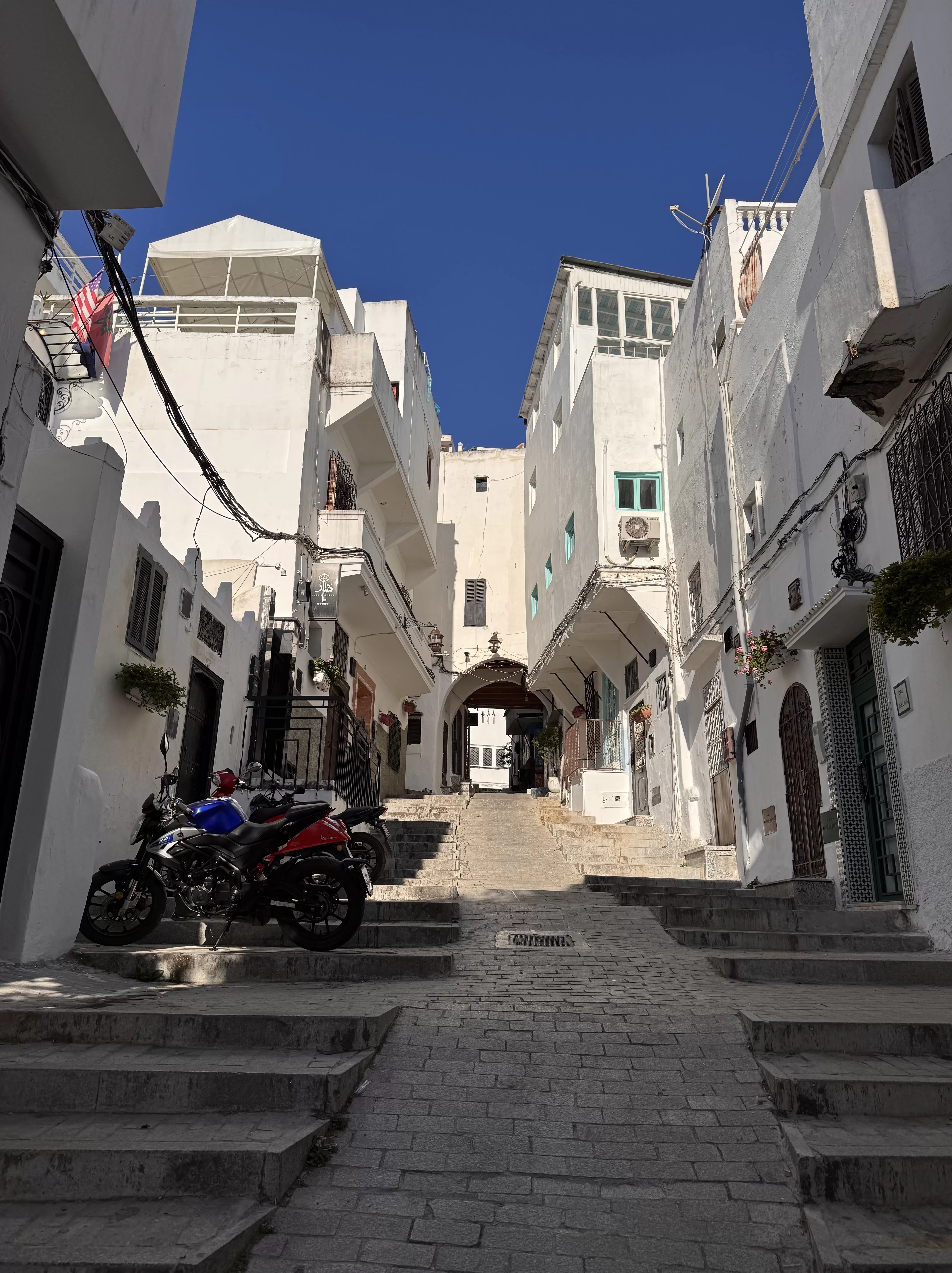
The Medina is one of Morocco’s most memorable experiences but it comes with a rhythm of its own.
- Many Medina lanes are narrow and busy, and some cannot be reached by car
- Taxis often drop off at the closest possible point
- Plan the final walk with luggage rather than assuming door-to-door car access
At first, it can feel disorienting but after a short time, it becomes part of the charm.
PLP Tip: Before arrival, ask your riad for the nearest vehicle drop-off, walking directions and whether someone can meet you with luggage. Confirm any porter fee beforehand. Our Where to Stay in Marrakech guide helps you consider accommodation and access together.
Connectivity & Navigation
 Connectivity & Navigation
- We encountered connectivity challenges in the Medina; reception varies by provider, building and location
- Offline maps are helpful to download in advance
PLP Tip: Download offline maps before setting out, save your riad’s address and phone number, and ask staff to mark the best walking route. Offline maps help when data drops, though small alleys and entrances may still need local directions.
Language
 Language
Morocco is multilingual and easy to navigate with basic awareness.
- Arabic and Amazigh are Morocco’s official languages; Moroccan Arabic (Darija) is commonly spoken, and French is widely used
- Spanish is common in northern cities like Tangier
- English is available in many tourist-facing businesses, but fluency varies
A few greetings and a thank-you go a long way. Save written addresses and use a translation app when needed; see the tourism office’s language guide for useful phrases.

Entry Requirements
 Entry Requirements
- U.S. passport holders visiting for tourism do not need a visa for stays of 90 days or less
- For U.S. travelers, the State Department currently lists at least six months of passport validity at entry and one blank page per stamp
Check the U.S. State Department’s Morocco entry guidance before departure. Other passport holders should confirm nationality-specific rules with the Moroccan consulate or Morocco’s official travel-formalities page. Transit-country and airline document rules may also apply.
Toilets & Small Essentials
 Toilets & Small Essentials
- Carry tissues – public restrooms may not have toilet paper
- Small change is often expected for restroom attendants
These are small details but they make a noticeable difference day-to-day.
Morocco Travel Etiquette: Thoughtful Everyday Customs
A little consideration makes daily encounters more comfortable. Ask permission before photographing people, including children, and accept a refusal gracefully. Follow posted photography and visitor rules at religious and cultural sites; do not assume every sacred space is open to visitors.
Dress thoughtfully in traditional neighborhoods and follow site-specific clothing requirements. In souks, greet sellers courteously, bargain politely where prices are negotiable, and respect fixed-price settings. Agree on the cost of any service before accepting it.
During Ramadan, be considerate about eating, drinking and smoking in public during daylight hours, and check opening times with your riad. The UK government’s local customs guidance is a useful reference.
What to Wear (Comfort + Culture)
 What to Wear (Comfort + Culture)
Morocco’s setting calls for thoughtful, practical dressing.
 See What to Wear in Morocco for detailed outfit guidance
- Comfortable walking shoes are essential
- Streets can be uneven, cobbled, and hilly
- Layers are helpful especially for cooler evenings in Agafay and northern cities
Our experience leaned heavily toward comfortable, modest, and breathable pieces—with a few more elevated options for evenings when needed.